

Hey there! As a supplier of Vickers Hardness Testers, I often get asked about the accuracy of measuring the diagonal length in these machines. So, let's dive right into it and break down what goes into getting an accurate diagonal length measurement with a Vickers Hardness Tester.
First off, what's a Vickers Hardness Tester? It's a nifty piece of equipment used to measure the hardness of materials. It works by pressing a diamond pyramid indenter into the surface of the material under a specific load. After that, we measure the diagonals of the indentation left on the material. From these diagonal measurements, we can calculate the Vickers hardness number (HV).
Now, the accuracy of measuring the diagonal length is super important. Why? Well, the Vickers hardness number is calculated based on the area of the indentation, which is directly related to the length of the diagonals. Even a small error in measuring these diagonals can lead to a significant difference in the calculated hardness value.
There are several factors that can affect the accuracy of diagonal length measurement in a Vickers Hardness Tester. Let's take a look at them one by one.
Instrument Precision
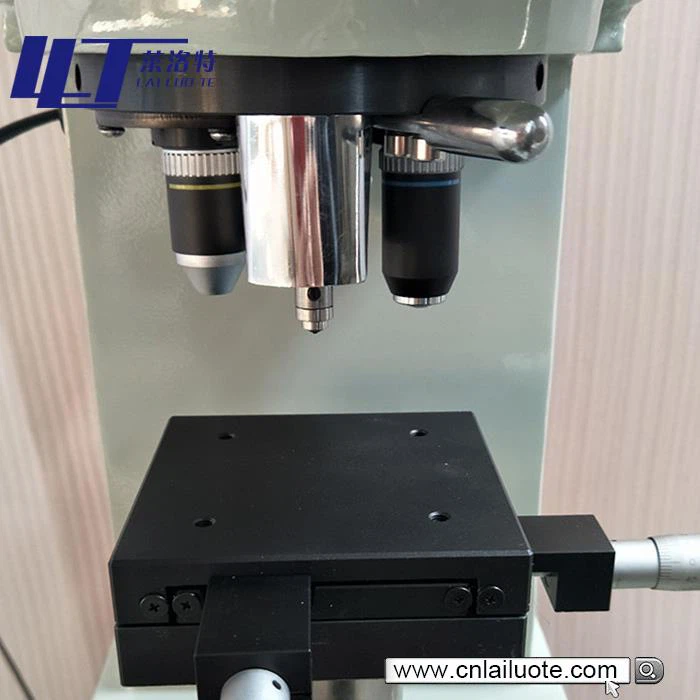
The precision of the Vickers Hardness Tester itself plays a huge role. High - quality testers are equipped with advanced optics and measuring systems. For example, some of our Vickers Testing Machine models come with high - resolution cameras and precise measuring scales. These features allow for more accurate measurement of the diagonal lengths. Cheaper or lower - quality testers may have less precise optics, which can lead to errors in reading the diagonals.

Operator Skill
The person using the Vickers Hardness Tester also has a big impact on the accuracy of the measurement. An experienced operator knows how to properly focus the microscope, align the indentation, and take the measurements. They can also identify and correct for any potential issues, like irregularities in the indentation shape. On the other hand, a novice operator might make mistakes, such as misaligning the measuring scale or not focusing the microscope correctly. That's why we always offer training to our customers who purchase our Micro Vickers Hardness Tester or other models.
Surface Preparation
The surface of the material being tested needs to be properly prepared. If the surface is rough, dirty, or has any defects, it can make it difficult to accurately measure the diagonal lengths. A smooth, flat, and clean surface is ideal. For example, if the surface has scratches or pits, it can distort the shape of the indentation, leading to inaccurate measurements. So, before using the Vickers Hardness Tester, it's important to grind, polish, and clean the surface of the material.
Indentation Quality
The quality of the indentation itself is crucial. The indenter should be in good condition, and the load should be applied evenly. If the indenter is worn or damaged, it can create an irregular indentation, making it hard to measure the diagonals accurately. Also, if the load is not applied perpendicular to the surface, the indentation may be distorted. That's why we ensure that our Discount Low Load Vickers Hardness Tester and other products are designed to apply the load precisely.
Environmental Conditions
Environmental factors can also affect the accuracy of diagonal length measurement. Temperature and humidity can cause the material to expand or contract slightly, which can change the size of the indentation. Vibrations in the testing environment can also make it difficult to take accurate measurements. That's why it's recommended to use the Vickers Hardness Tester in a stable, controlled environment.
So, how do we ensure accurate diagonal length measurement? At our company, we focus on providing high - quality Vickers Hardness Testers with top - notch precision. Our testers are designed with the latest technology to minimize errors in measurement. We also offer comprehensive training to our customers to help them operate the machines correctly.
In addition, we provide support in surface preparation techniques. We can offer advice on the best methods to prepare the material surface for accurate testing. And we're always available to answer any questions our customers may have about environmental conditions and how to control them during testing.
If you're in the market for a Vickers Hardness Tester, it's important to consider all these factors. You want a tester that can give you accurate and reliable results. Our range of Vickers Testing Machine and Micro Vickers Hardness Tester models are designed with these considerations in mind. We're committed to providing you with the best equipment and support to ensure accurate hardness testing.
If you're interested in learning more about our Vickers Hardness Testers or have any questions about the accuracy of diagonal length measurement, don't hesitate to reach out. We're here to help you make the right choice for your hardness testing needs. Whether you're in a research lab, a manufacturing plant, or any other industry that requires hardness testing, we have the products and expertise to meet your requirements. Contact us today to start a conversation about your procurement needs.
References
- Callister, W. D., & Rethwisch, D. G. (2017). Materials Science and Engineering: An Introduction. Wiley.
- ASTM E92 - 17 Standard Test Method for Vickers Hardness of Metallic Materials.