

Rockwell Hardness Tester
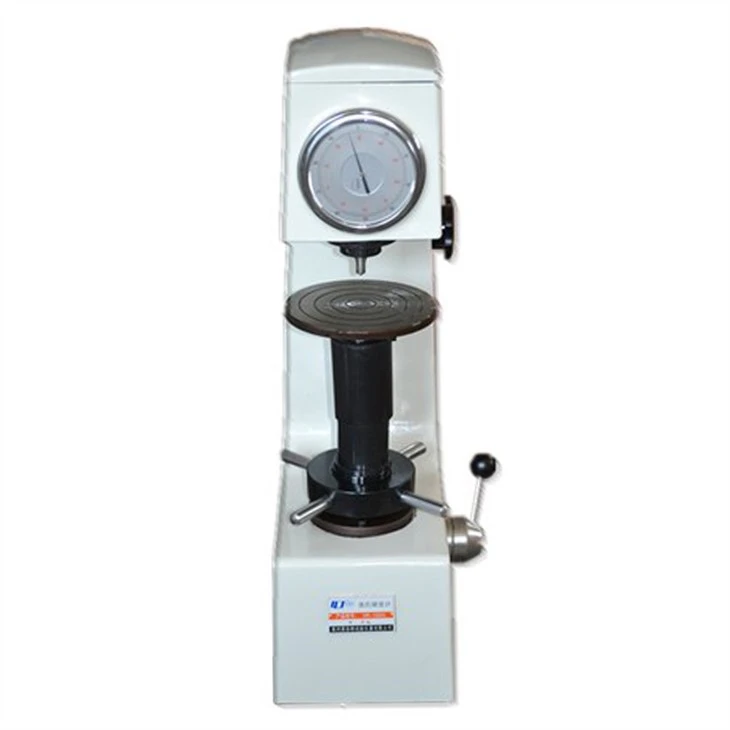
The Rockwell hardness tester is a device designed to measure the inherent strength and durability of materials. It utilizes a specific methodology, allowing scientists to investigate materials' ability to resist deformation and wear. The tester employs a particular indenter, pressed into the material with a defined force, and the resulting indentation depth reveals the material's hardness. This metric is vital for engineers and scientists to predict the material's durability and wear resistance.
Advantages of Rockwell Hardness Tester
Versatility and Wide Applicability
One of the significant advantages of the Rockwell hardness tester is its versatility and wide applicability across different materials. It can be used to measure the hardness of various metals, including ferrous and non-ferrous alloys. Additionally, the Rockwell hardness test is suitable for materials such as plastics, ceramics, and composites, expanding its range of applications beyond traditional metals.
Quick And Efficient
The Rockwell Hardness tester offers rapid results, making it a time-efficient option for hardness testing. With its straightforward procedure and quick measurements, it enables efficient assessment of material hardness, facilitating swift decision-making in production processes.
Ease of Use
The Rockwell hardness tester is known for its ease of use, making it accessible to operators with varying levels of expertise. This simplicity in operation allows for efficient and quick hardness measurements, saving time and resources in quality control and material assessment processes.
Wide Range of Hardness Scales
The Rockwell hardness tester offers a wide range of hardness scales to accommodate different material characteristics. Various Rockwell scales, such as Rockwell A, B, C, D, E, and others, are designed to measure the hardness of specific materials or material conditions. This flexibility makes the Rockwell hardness test adaptable to diverse applications and ensures precise hardness measurements for a wide range of materials.
Surface Preparation Flexibility
Another advantage of the Rockwell hardness tester is its flexibility regarding surface preparation. While a smooth surface is preferred for more accurate results, the Rockwell hardness test can be performed on surfaces with minor imperfections or roughness. This characteristic is beneficial in situations where surface finishing is challenging or time-consuming. It allows for reliable hardness measurements to be obtained even from components or materials with practical limitations on achieving a perfectly smooth surface.
Non-Destructive Testing
The Rockwell hardness tester is non-destructive, meaning it does not cause significant damage to the material being tested. The indentation left by the indenter is relatively small and does not compromise the structural integrity of the material. This non-destructive nature allows for hardness testing on finished products, components, or materials that need to remain intact for further use or assessment.
-
![Electronic Hardness Tester HVS-1000A Automatic Turret Digital Micro Hardness Tester]() Electronic Hardness Tester HVS-1000A Automatic Turret Dig...The MHBSV-3000ZET visual fully automatic Brinell hardness tester is equipped with an 8-inch touch screen and a high-speed ARM processor, featuring intuitive display, friendly human-machine...read more
Electronic Hardness Tester HVS-1000A Automatic Turret Dig...The MHBSV-3000ZET visual fully automatic Brinell hardness tester is equipped with an 8-inch touch screen and a high-speed ARM processor, featuring intuitive display, friendly human-machine...read more -
![Electronic Hardness Tester Injection Mold Safety Monitor Instant Anti-Crushing Detection-Industrial-Grade Protection]() Electronic Hardness Tester Injection Mold Safety Monitor ...The MHBSV-3000ZET visual fully automatic Brinell hardness tester is equipped with an 8-inch touch screen and a high-speed ARM processor, featuring intuitive display, friendly human-machine...read more
Electronic Hardness Tester Injection Mold Safety Monitor ...The MHBSV-3000ZET visual fully automatic Brinell hardness tester is equipped with an 8-inch touch screen and a high-speed ARM processor, featuring intuitive display, friendly human-machine...read more -
![High Automatic Turret Digital Micro Hardness Tester]() High Automatic Turret Digital Micro Hardness TesterImportant notice s and safety information Main Features The 8-inch touch screen electronic Brinell hardness tester is mainly used to measure the hardness of cast iron, steel, non-ferrous metals,...read more
High Automatic Turret Digital Micro Hardness TesterImportant notice s and safety information Main Features The 8-inch touch screen electronic Brinell hardness tester is mainly used to measure the hardness of cast iron, steel, non-ferrous metals,...read more -
![LaiZhou High Accuracy CE Certificated HBRVS-250 Universal Durometers Brinell Rockwell Vickers Hardness Tester For Metal]() LaiZhou High Accuracy CE Certificated HBRVS-250 Universal...Important notice s and safety information Main Features The 8-inch touch screen electronic Brinell hardness tester is mainly used to measure the hardness of cast iron, steel, non-ferrous metals,...read more
LaiZhou High Accuracy CE Certificated HBRVS-250 Universal...Important notice s and safety information Main Features The 8-inch touch screen electronic Brinell hardness tester is mainly used to measure the hardness of cast iron, steel, non-ferrous metals,...read more -
![High Accuracy CE Certificated HBRVS-250 Universal Durometers Brinell Rockwell Vickers Hardness Tester For Metal]() High Accuracy CE Certificated HBRVS-250 Universal Duromet...Important notice s and safety information Main Features The 8-inch touch screen electronic Brinell hardness tester is mainly used to measure the hardness of cast iron, steel, non-ferrous metals,...read more
High Accuracy CE Certificated HBRVS-250 Universal Duromet...Important notice s and safety information Main Features The 8-inch touch screen electronic Brinell hardness tester is mainly used to measure the hardness of cast iron, steel, non-ferrous metals,...read more -
![Rockwell Brinell Vickers Type Hardness Tester Microhardness Tester Micro Vickers Hardometer Universal Hardness Tester]() Rockwell Brinell Vickers Type Hardness Tester Microhardne...Important notice s and safety information Main Features The 8-inch touch screen electronic Brinell hardness tester is mainly used to measure the hardness of cast iron, steel, non-ferrous metals,...read more
Rockwell Brinell Vickers Type Hardness Tester Microhardne...Important notice s and safety information Main Features The 8-inch touch screen electronic Brinell hardness tester is mainly used to measure the hardness of cast iron, steel, non-ferrous metals,...read more -
![Lailuote Economic Weighting Loading Brinell Hardness Tester Brinell Hardness Blocks Brinell Hardness Testing Machine]() Lailuote Economic Weighting Loading Brinell Hardness Test...Important notice s and safety information Main Features The 8-inch touch screen electronic Brinell hardness tester is mainly used to measure the hardness of cast iron, steel, non-ferrous metals,...read more
Lailuote Economic Weighting Loading Brinell Hardness Test...Important notice s and safety information Main Features The 8-inch touch screen electronic Brinell hardness tester is mainly used to measure the hardness of cast iron, steel, non-ferrous metals,...read more -
![Lailuote ASTM E18 Hot Sale Manual Rockwell Hardness Tester HRA HRB HRC Rockwell Durometer Laboratory Heat Treatment HR Testing Machine]() Lailuote ASTM E18 Hot Sale Manual Rockwell Hardness Teste...Important notice s and safety information Main Features The 8-inch touch screen electronic Brinell hardness tester is mainly used to measure the hardness of cast iron, steel, non-ferrous metals,...read more
Lailuote ASTM E18 Hot Sale Manual Rockwell Hardness Teste...Important notice s and safety information Main Features The 8-inch touch screen electronic Brinell hardness tester is mainly used to measure the hardness of cast iron, steel, non-ferrous metals,...read more -
![Lailuote Mattress Firmness Tester Stroke Hardness Grade Tester For Foam Spring Mattress]() Lailuote Mattress Firmness Tester Stroke Hardness Grade T...Important notice s and safety information Main Features The 8-inch touch screen electronic Brinell hardness tester is mainly used to measure the hardness of cast iron, steel, non-ferrous metals,...read more
Lailuote Mattress Firmness Tester Stroke Hardness Grade T...Important notice s and safety information Main Features The 8-inch touch screen electronic Brinell hardness tester is mainly used to measure the hardness of cast iron, steel, non-ferrous metals,...read more -
![Automatic Crankshaft Rockwell Hardness Tester For Automotive Engine Crankshafts Customized Machines On Demand]() Automatic Crankshaft Rockwell Hardness Tester For Automot...Important notice s and safety information Main Features The 8-inch touch screen electronic Brinell hardness tester is mainly used to measure the hardness of cast iron, steel, non-ferrous metals,...read more
Automatic Crankshaft Rockwell Hardness Tester For Automot...Important notice s and safety information Main Features The 8-inch touch screen electronic Brinell hardness tester is mainly used to measure the hardness of cast iron, steel, non-ferrous metals,...read more -
![Durometer Manual Rockwell Hardness Tester For High Hardness Alloy Materials]() Durometer Manual Rockwell Hardness Tester For High Hardne...Important notice s and safety information Main Features The 8-inch touch screen electronic Brinell hardness tester is mainly used to measure the hardness of cast iron, steel, non-ferrous metals,...read more
Durometer Manual Rockwell Hardness Tester For High Hardne...Important notice s and safety information Main Features The 8-inch touch screen electronic Brinell hardness tester is mainly used to measure the hardness of cast iron, steel, non-ferrous metals,...read more -
![High Test Efficiency Durometer Manual Rockwell Hardness Tester For High Hardness Alloy Materials]() High Test Efficiency Durometer Manual Rockwell Hardness T...Important notice s and safety information Main Features The 8-inch touch screen electronic Brinell hardness tester is mainly used to measure the hardness of cast iron, steel, non-ferrous metals,...read more
High Test Efficiency Durometer Manual Rockwell Hardness T...Important notice s and safety information Main Features The 8-inch touch screen electronic Brinell hardness tester is mainly used to measure the hardness of cast iron, steel, non-ferrous metals,...read more


Why Choose Us
Application
Laizhou Lailuote Testing Instrument Co., Ltd. specializes in researching, developing, and manufacturing hardness testers and metallographic preparation instruments. Our products are widely used in quality control, colleges, laboratories, and various industries.
Professional Team
We have assembled a professional team that includes engineers, scientists, marketing experts, and customer service personnel. Many team members have over 40 years of experience in the field.
Solution
Our specialized sales engineers are available to provide tailored solutions for customers around the world. You can reach them by phone, email, or online.
Quick Response
We have built the infrastructure to meet the diverse needs of our customers, both domestically and internationally. We listen to our customers, focus on their needs, and respond quickly to their requests.
Knoop Hardness Testers
Often combined with Vickers because it is another microhardness testing technique. Knoop Hardness Testers uses a diamond-shaped indenter and is appropriate for light test loads. For example, to assess the risk of cracking in brittle materials such as ceramics or coatings.
Ultrasound Hardness Testers
This method is the top pick for hardness testing operations that want to avoid destroying the object being tested, also known as non-destructive testing. These hardness testers consist of a probe and an electronic module. There are two methods of ultra-sonic testing, contact and immersion. Contact testing allows for inspection of parts that cannot be transported and immersion immerses the material in a liquid in order to obtain better movement of the sound waves.
The Vickers Hardness Testers
The Vickers method is a microhardness testing method. This method bears many similarities to the Brinell method. The difference is Vickers Hardness Testers use a diamond penetrating pyramid with a square base and a fixed load. Because of this, Vickers allows light test loads as well as macro loads up to 30 kg. It can test all types of materials, both soft and hard and is easy to perform.
The Brinell Hardness Testers
The Brinell method is considered to be one of the more common, if not the most common hardness test considering it was the first hardness test. This test method uses a steel ball indenter with a diameter that varies according to the sample to be measured. This is the preferred method for rough samples and can test just about all types of metal. The Brinell method uses a wide range of indenters so the range of measuring is wide with a high-test load (3,000 Kg) as well.

● Move the crank handle to the forward or start position.
Select the proper indenter/penetrator and insert it into the plunger rod receiver.
● Place the proper anvil into the elevating screw.
● Select proper major load either by turning the selector knob or by adding or removing weight(s). (depending on the tester model you have).
● Place specimen or Rockwell test block on the anvil. Make sure the underside of the specimen is free from scale and burrs.
● Raise specimen into contact with the indenter/penetrator by turning the capstan handwheel clockwise. Continue turning until the small pointer is near the black zone or dot. Continue until the long pointer is in a vertical position (within 5 divisions, plus or minus). The minor load (10 kg for regular Rockwell and 3 kg for superficial Rockwell) is now fully applied.
● Set the dial to zero. Adjust the dial gage until the zero set line is aligned behind the long pointer.
● Push down on the load release bar to apply the major load.
● When the long pointer comes to rest, within 2-3 seconds, return the crank handle to its forward or start position. This removes the major load. (The minor load is still applied).
● In this step you will obtain your reading. Record the Rockwell number that the long pointer is pointing to. (typically the C scale is in black and the B scale is in red)
● Remove the minor load by turning the capstan handwheel counter-clockwise, lowering the elevation screw and specimen so that they clear the indenter/penetrator.
● Remove the specimen or move to another area of the specimen or test block for additional testing. Be sure to be at least three indent diameters away from any other indention for accurate readings.
When it comes to hardness testing, two widely used methods are the Rockwell Hardness Tester and the Brinell Hardness Tester. Let's explore how these methods compare and their respective advantages, Rockwell hardness tester vs Brinell.
The Rockwell Hardness Tester and the Brinell Hardness Tester are both used to assess the hardness of materials, but they differ in their testing procedures and application areas. In the Rockwell Hardness Testing, a minor and a major load are applied successively to the material surface, and the depth of penetration is measured. This method offers quick results and is suitable for a wide range of materials, including metals, plastics, and composites.
On the other hand, the Brinell Hardness Test involves applying a single, larger load to the material surface using a hardened steel ball indenter. The diameter of the resulting indentation is measured to determine the material's hardness. While the Brinell Hardness Test provides accurate results, it is more suitable for softer materials and may require a longer testing time compared to the Rockwell method.
When comparing the two tests, several factors come into play. The Rockwell Hardness Tester is preferred for its speed, versatility, and ability to test a variety of materials efficiently. This tester is suitable for various industrial applications, including manufacturing, quality control, and material selection. It is particularly useful for measuring the hardness of hardened steels and alloys.
In contrast, the Brinell Hardness Test is known for its accuracy and suitability for testing softer materials. This tester provides accurate results, especially for materials with non-uniform structures or rough surfaces. It finds applications in industries such as metallurgy, automotive, and aerospace, where accurate measurements of material hardness are essential.
Importance of Rockwell Hardness Tester in Various Industries and How it Works
Rockwell hardness testing is an essential quality control technique used across a wide range of industries. It provides valuable information about the material's ability to resist deformation and wear, making it a critical tool in various applications. Some of the industries that rely on Rockwell hardness testing include:
Manufacturing Industry: In manufacturing, Rockwell hardness testing is used to determine the hardness of materials such as metals, plastics, and composites. The hardness of the material can affect its strength, durability, and wear resistance, making Rockwell hardness testing a crucial step in quality control.
Aerospace Industry: The aerospace industry uses Rockwell hardness testing to ensure the quality and durability of materials used in aircraft construction. Rockwell hardness testing helps manufacturers select the right materials for different components of the aircraft, such as landing gear, engine parts, and structural components.
Automotive Industry: In the automotive industry, Rockwell hardness testing is used to test the hardness of materials used in engine components, gears, and other critical parts. This helps manufacturers ensure that their products can withstand the stresses of normal use and keep drivers safe.
Construction Industry: Rockwell hardness testing is used in the construction industry to test the hardness of materials such as concrete, bricks, and tiles. This helps builders select materials that can withstand the stresses of construction and ensure the durability of the finished product.
Medical Industry: In the medical industry, Rockwell hardness testing is used to test the hardness of materials used in medical devices and implants. This helps manufacturers ensure the quality and durability of their products and reduce the risk of device failure or breakage.
Mining Industry: The mining industry uses Rockwell hardness testing to evaluate the hardness of minerals, rocks, and ores. This helps mining companies select the right tools and equipment for their operations and ensure the durability of mining equipment.
How Rockwell Hardness Tester Works
Rockwell hardness testing is a non-destructive testing method that measures the resistance of a material to indentation. The Rockwell hardness tester applies a load to the material's surface using a diamond or tungsten carbide ball or a conical diamond-tipped indenter. The depth of the indentation left by the indenter is measured, and the Rockwell hardness value is calculated based on the difference between the depth of the indentation and the depth of the initial reference point.
The Rockwell hardness tester uses a dial or digital readout to display the hardness value. The hardness value is determined by the depth of the indentation made by the indenter, and it is expressed as a number on a Rockwell scale. There are several Rockwell scales, each with a different combination of load and indenter type, which are used to test a wide range of materials with varying hardness values.
Components of a Rockwell Hardness Tester
A Typical Rockwell Hardness Tester Consists Of Several Key Components:
Indenter
The indenter is the tool that is pressed into the material to create the indentation. In Rockwell testing, the indenter can be either a diamond cone or a hardened steel ball, depending on the hardness scale being used.
01
Anvil
The anvil provides a stable surface against which the material being tested is placed. It ensures that the material is properly supported and prevents any deflection during the test.
02
Load Application System
The load application system applies the predetermined loads to the indenter. It typically consists of a mechanical or hydraulic mechanism that controls the application of the minor and major loads. Feel Free to Navigate about Multitek’s Other Products/Machines
03
Depth Measurement System
The depth measurement system accurately measures the depth of penetration of the indenter into the material under the applied loads. This measurement is crucial for calculating the Rockwell hardness number.
04
Display and Readout
The display and readout system provides the results of the hardness test in the form of Rockwell hardness numbers. It may include analog or digital indicators, depending on the model of the hardness tester.
05
Indenter Types: The Rockwell Hardness Tester typically uses two types of indenters: a diamond cone for hard materials and a hardened steel ball for softer materials.
Test Scales: Different Rockwell scales are available to accommodate various materials and hardness ranges. Common scales include Rockwell HRC (for hard materials like steel), Rockwell HRB (for softer materials), and Rockwell HRA (for very hard materials).
Test Forces: The tester applies a preload followed by a main load to the indenter. The main load is maintained for a specified dwell time, and the hardness value is determined based on the depth of penetration.
Depth Measurement: The depth of penetration is measured using a dial gauge or an electronic sensor, providing a quantitative measure of the material’s hardness.
Automatic And Manual Operation: Rockwell Hardness Testers can be operated manually or in automatic modes. Automatic testers are often equipped with advanced features for increased efficiency and consistency in testing.
User-Friendly Controls: The instrument features user-friendly controls for setting parameters, adjusting testing conditions, and initiating tests. The interface may include a digital display for easy reading of results.
Calibration: Regular calibration is essential to maintain the accuracy and reliability of hardness measurements. Calibration is typically performed using standardized test blocks with known hardness values.
Sample Fixturing: Fixtures or anvil support systems are provided to securely hold and position the test specimen during testing, ensuring accurate and repeatable results.
Durable Construction: The Rockwell Hardness Tester is constructed with robust materials to withstand the demands of industrial environments and provide long-term durability.
Safety Features: Safety considerations are integrated into the design, including features such as safety guards and interlocks to prevent access to moving parts during testing.
Data Recording: Advanced models may include features for data recording, allowing users to store and analyze hardness test results for quality control and documentation purposes.
Compliance with Standards: Our Rockwell Hardness Tester is manufactured to comply with relevant industry standards, such as ASTM E18 or ISO 6508, ensuring that hardness testing procedures meet established norms.
How Reliable Is the Rockwell Hardness Tester Method
In some circumstances, using a Rockwell Hardness Tester to determine a material's strength is better. This is as a result of the advantages outlined below.
There Is No Need For Material Preparation
In order to obtain the most accurate readings, the sample material for several tests needs to be polished, ground, broken up, and buffed. The sample surface must essentially be as flat and variable-free as is practical for tests like the Knoop and Vickers technique.
No Optical Assessment
Because the majority of Rockwell hardness testers do not use diagonal scales to assess hardness, the hardness value is easily readable. This is especially true if you use a digital Rockwell Hardness tester, as the findings are displayed on the screen immediately after a brief processing period.
As most hardness testers that employ the Rockwell method don't measure hardness using diagonal scales, the value of the hardness can be read straight from the test results. If you use a digital Rockwell Hardness tester, this is definitely the case because the results are presented on the screen right away after a little processing period.
The likelihood of an operator error on the readings is drastically decreased in the absence of optical evaluation.
Being Economical
Rockwell hardness testers have relatively brief test cycles since they are not required to have complex optical assessment systems. Operators would be able to swiftly switch between testing different specimens, making the process more effective.
Nature of Non-Destructive
The Rockwell method is a non-destructive and non-invasive approach, despite the fact that the test leaves a sizable impression on the material. The actual specimen can still be used after every test for additional uses.
Test load: The hardness of the material determines this. In the case of steel or alloys, the test load can be as much as 3,000 kgf. On the other hand, soft metals will only need a test load of 500 kgf. The higher the load used is, the higher the accuracy of the test will be. The impression made on an object during testing should not exceed 10% of its thickness.
Hardness Range: This is the factor that dictates the material of the indenter. If you are working with a hardness of over 650 HB/30, you would need a diamond indenter. If you are testing the hardness of an object with a value less than this, steel or hard metal indenters should be effective.
Accuracy level: This is dependent on the surface that you will be measuring. Things such as the cleanliness, texture, system, etc. of the surface come into play.
Adaptability Of The Device: The shape and size of the material that will be tested is to be considered when selecting an appropriate hardness tester.
Our Factory
Laizhou lailuote testing instrument Co.,ltd. specializes in researching&developing, manufacturing hardness testers and metallographic preparation instruments. Our products are Widely used in quality control, college, laboratories and industries. Founded in 2007, Located in the "base of china hardness testers" -Laizhou city, Lailuote is today one of China's leading manufacturers of hardness testers and metallographic preparation products. Over the years we have built a professional team of engineers, scientists, marketing sales and customer services, in which many people has more than 40 years experience in this field.

FAQ
Q: What is the purpose of a Rockwell hardness tester?
Q: What are the safety precautions for Rockwell hardness test?
Q: How can I improve my Rockwell hardness test?
Q: Is Rockwell hardness test destructive?
Q: What is the ideal Rockwell hardness?
Q: What temperature should Rockwell hardness test be?
Q: What is the minimum thickness required for Rockwell hardness testing?
Q: Which is more accurate Brinell or Rockwell hardness?
Q: How accurate is the Rockwell hardness tester?
Q: How deep is the indentation in Rockwell hardness test?
Q: What are the different types of Rockwell hardness testers?
Q: What are the methods of Rockwell hardness testing?
Q: What is the difference between Rockwell B and C hardness test?
Q: What is the standard for Rockwell hardness test?
Q: What is the difference between Rockwell and Vickers hardness tester?
Q: What are the advantages of Rockwell hardness test?
Q: What is the conclusion of Rockwell hardness test?
Q: What is the difference between the Brinell and Rockwell hardness test?
Q: Why is Rockwell hardness test necessary?
Q: What precautions should be taken when using a Rockwell hardness test?
We're professional rockwell hardness tester manufacturers and suppliers in China, specialized in providing high quality products. We warmly welcome you to wholesale bulk rockwell hardness tester from our factory. For price consultation, contact us.
hardness testing measuring equipment, hardness testing standard, iron hardness tester