

Metallurgical Microscope
A Metallurgical microscope is another type of light microscope. These microscopes are different from the typical biological microscopes in that they use the principle of reflected light. They use vertical illumination, and the light source is inserted through a beam splitter into a microscope tube below the eyepiece. Light comes down through the objective and is focused on the specimen through the objective. Light reflected or scattered back to the objective lens is then imaged on the eyepiece.
Advantages of Metallurgical Microscope
Improved Resolution
Metallurgical Microscope can correct for aberrations and distortions, resulting in sharper and clearer images with improved resolution.
Enhanced Contrast
Metallurgical Microscope be used to manipulate light in ways that enhance image contrast and reduce background noise, resulting in more detailed and informative images.
Wider Field Of View
Metallurgical Microscope can provide a wider field of view, enabling researchers to observe larger areas of the sample at once, resulting in more efficient and comprehensive analysis.
Greater Sensitivity
Metallurgical Microscope can improve the sensitivity of the microscope system, enabling detection of weaker signals and smaller objects that would otherwise be undetectable.
-
![Manual Metallographic Specimen Cutting Machine]() Manual Metallographic Specimen Cutting MachineThis machine is designed for cutting general metallographic and petrographic specimens. To ensure safe operation and high-quality sample preparation, it features a fully enclosed double-shell...read more
Manual Metallographic Specimen Cutting MachineThis machine is designed for cutting general metallographic and petrographic specimens. To ensure safe operation and high-quality sample preparation, it features a fully enclosed double-shell...read more -
![Metallographic Microscope]() Metallographic Microscope4XB binocular-type inverted metallurgical microscope is used for the identification and analysis of various metals and alloys of the organizational structure, the general microstructure of the...read more
Metallographic Microscope4XB binocular-type inverted metallurgical microscope is used for the identification and analysis of various metals and alloys of the organizational structure, the general microstructure of the...read more -
![Inverted Metallurgical Microscope]() Inverted Metallurgical MicroscopeMain features: 4XC-type metallographic microscope is mainly used to identify and analyze the internal structure of the metal structureread more
Inverted Metallurgical MicroscopeMain features: 4XC-type metallographic microscope is mainly used to identify and analyze the internal structure of the metal structureread more


Why Choose Us
Application
Laizhou Lailuote Testing Instrument Co., Ltd. specializes in researching, developing, and manufacturing hardness testers and metallographic preparation instruments. Our products are widely used in quality control, colleges, laboratories, and various industries.
Professional Team
We have assembled a professional team that includes engineers, scientists, marketing experts, and customer service personnel. Many team members have over 40 years of experience in the field.
Solution
Our specialized sales engineers are available to provide tailored solutions for customers around the world. You can reach them by phone, email, or online.
Quick Response
We have built the infrastructure to meet the diverse needs of our customers, both domestically and internationally. We listen to our customers, focus on their needs, and respond quickly to their requests.
Upright Metallurgical Microscope
The objective of an upright metallurgical microscope is above the specimen. This is the most commonly used type. The illumination system is also located above the stage, which allows light to be directed from the objective to the specimen and back to the eyepiece. The upright metallurgical microscope can be equipped with a pillar stand or the typical base stand according to the user's requirements. The typical base stand makes the microscope more stable when it is used to view relatively small specimens. The pillar stand increases the flexibility of the microscope to view specimens of different sizes.
Inverted Metallurgical Microscope
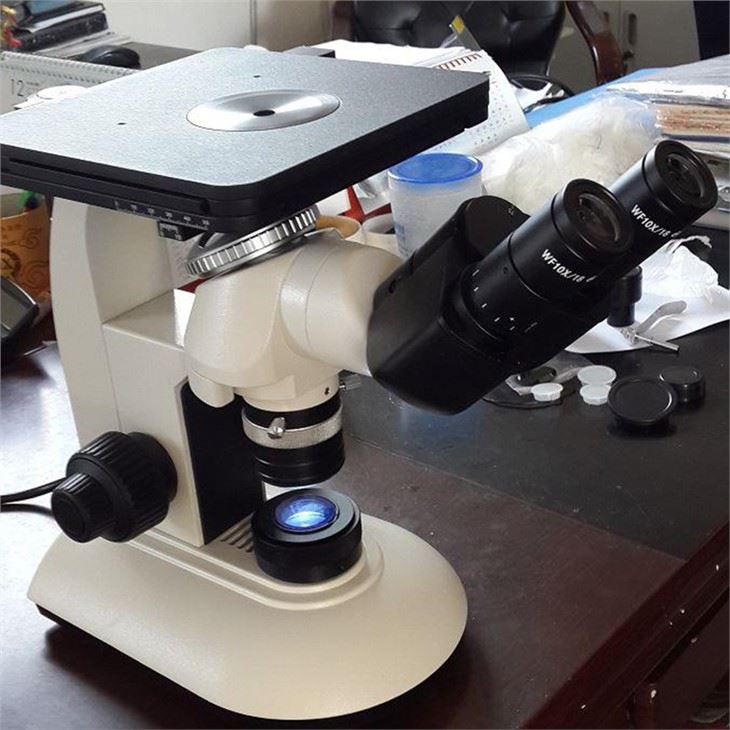
The objective of an inverted microscope is located below the specimen. It can observe larger specimens. They have a illumination system installed under the stage. This allows light to pass through the objective, reach the specimen, and reflect back to the eyepiece. One of the greatest advantages of this microscope is that it allows for larger specimens that cannot be seen using an upright microscope. This makes them ideal in a number of fields involved in engineering and manufacturing where the microscope serves to investigate cracks or corrosion of fractures.

Metallurgical microscopes have a purpose in nearly any industry or science that must observe flat or glossy metals alongside other surfaces. Traditional stereoscopic microscopes can't accomplish this. Because of the ways that metallurgical microscopes use light to reflect off of the specimens, researchers can look at these materials much closer than before, which is beneficial in a variety of fields.
For obvious reasons, metallurgical microscopes are vital in Metallurgy and Archaeometallurgy, which are the fields dedicated to the study of metal in the present day as well as metal throughout history. In addition, many researchers involved in Gemology utilize metallurgy microscopes as they grade and value precious stones. It isn't crucial to the field, but if a gem valuer has the right coaching and experience, a metallurgical microscope can be very beneficial to their work.
Metallurgical microscopes are also used in mineralogy for very similar purposes. Mineralogists can use the microscopes to identify a minerals origin, its age, and a variety of other attributes that aren't possible with standard microscopes.
Metallurgical microscopes are used to examine samples like metals and alloys that block light from passing through them. They illuminate the sample with reflected light to produce an image of it. The following characteristics of metallurgical microscopes make them perfect for viewing metals: Magnifications up to 1000x are often possible with metallurgical microscopes, which are required to observe the intricate details of metal samples.
The utilization of thick and opaque samples is made possible by the considerable working distance of metallurgical microscopes between the objective lens and the sample. Polarization filters can be added to metallurgical microscopes so that the crystal structure of metals can be seen.
On the other hand, biological microscopes are made to examine materials like cells and tissues that permit light to flow through them. They illuminate the sample with transmitted light to produce an image of it. The following characteristics of biological microscopes make them perfect for examining biological samples: Most biological samples may be seen in detail with biological microscopes, which typically have a magnification range of 40x to 1000x.
In comparison to metallurgical microscopes, biological microscopes have a smaller working distance between the objective lens and the sample. This is due to the fact that biological samples are often more transparent and thinner than metal samples. Phase contrast filters, which can be used to improve the contrast of transparent samples, can be added to biological microscopes.
Metallurgical microscopes and biological microscopes are different in their construction in addition to the previously mentioned distinctions. Because they are made to survive the usage of tough and abrasive samples, metallurgical microscopes are often more robust and long-lasting than biological microscopes.
The Unique Characteristics of Metallurgical Microscopes
Metallurgical microscopes offer researchers high magnification capabilities along with different reflected and transmitted light options. With these microscopes, researchers have the ability to view even opaque items at incredibly high magnifications.
We'll look at the components of metallurgical microscopes, what separates them from other types of microscopes, and the best uses for metallurgical microscopes.
The Components
Metallurgical microscopes are optical, which separates them from other microscopes in methods of specimen illumination. To look at materials like metal at a microscopic level, the specimen must be illuminated from frontal lighting, which is then reflected onto the sample. The resulting image quality for the researcher greatly depends on the quality of the objective.
Metallurgical microscopes are available in both binocular, dual head, and trinocular models. This allows for maximum flexibility and expandability for the user. In addition, you can also pick up metallurgical microscopes in inverted, upright, and boom stand models to better suit your existing lab space and your requirements. They are highly customizable, and professional microscope sellers like can add digital screens, microscopy cameras, and special software for even more applications.
Different Magnification Tools
Metallurgical Microscopes Are Available With a Few Different Types Of Magnification Including:
● Differential Interference Contrast: Is a specific technique that renders 3D imagery with a crucial amount of comparison to samples under the microscope. It is applied with IR or optical light for the imaging of thick biological material or samples for better research.
● Polarized light: A sort of light by the polarizer positioned nearby to the microscope eyepiece. It is commonly applied to viewing crystalline generation of non-transparent metals.
● Darkfield Illumination: Is specific lightning where the central light is restricted to allow indirect sunlight to strike the transparent and spotless samples. When the image is referred to at inclined angles with a dark background that provides the revelation of non-flat spaces.
● Brightfield Illumination: Is the other lighting aspect that offers you to view dark samples with a light background. The most common microscopic technique allows viewing cells without spotting by making the cross-section of extensively structured samples possible. The thicker the sample is, the more the microscope transmits light.

Sample Preparation Techniques For Metallurgical Microscopy
A metallurgical microscope, also known as a metallographic microscope, is a specialized type of microscope used for the examination and analysis of metallic materials. It is designed to provide high magnification and resolution, allowing for detailed observation of the microstructure of metals and alloys.
Metallurgical microscopes are commonly used in materials science and engineering, as well as in industries such as manufacturing, aerospace, automotive, and metallurgy. They play a crucial role in quality control, research, and development processes, as they enable the examination of the internal structure of metals to assess their mechanical properties, composition, and overall quality.
Sample preparation techniques for metallurgical microscopy are essential to obtain accurate and reliable results. These techniques involve several steps, including cutting, mounting, grinding, polishing, and etching of the metal sample. Cutting is performed to obtain a representative section of the material, which is then mounted in a resin or metallographic mount to provide stability during the subsequent steps. Grinding and polishing are carried out to remove surface imperfections and create a smooth, flat surface for observation. Etching is often used to reveal the microstructure by selectively attacking certain phases or constituents of the metal.
In recent years, there have been advancements in sample preparation techniques for metallurgical microscopy. For instance, automated systems have been developed to streamline the process, reducing human error and increasing efficiency. Additionally, new etching solutions and methods have been introduced to enhance the contrast and reveal finer details of the microstructure. Furthermore, digital imaging and image analysis techniques have been integrated with metallurgical microscopes, allowing for quantitative analysis and documentation of the observed microstructures.
How Does Metallurgical Microscope Work
The Metallurgical Microscopes is a significant high-power complex microscope that may view non-transparent samples and objects. It isn't required to pass the light through the object or sample on the metallurgical microscope to be obvious, as the supplied light doesn't come from the bottom. They pick up the referred light off the sample or object which means that the light comes from the top, from the objectives and eyepiece.
The metallurgical microscopes apply a specific illuminator and objective installation called “EPI illumination”, or referred light. The lights are supplied from the box that is fixed between the microscope head and the objective turret and referred to with the mirror. The light is supplied through the specific objective that allows the light to be referred to the sample or object up into the prism, and be visible in the eyepiece.
The light generates from the illumination box, then supplied to the glass-covered with the reflecting component. The light comes from the angle and reflects down into the object, focused on the object or sample, and then supplied at various angles on the reflecting component, which allows it to go through the glass and not reflect it off. After that, it maintains the eyepiece and becomes visible to the human eye.
Metallurgical microscopes have application in every industry which deals with flat or glossy metals alongside other surfaces. Demand of the alloy metals or material mixture in industrial segment to manufacture the components with proper qualities and required properties, for that purpose industrial manufacturers and solution providers are enhancing their research and development centers which is driving the market for metallurgical microscope.
Higher implementation of research and development in industries will increase the growth of metallurgical microscope market. Enhancement in the demand of metallurgical solution is creating the scope for metallurgical microscope in market.
Main challenging factor in front of the market growth for metallurgical microscope is its high cost, also one more factor that affect the cost of it is getting the high definition images along with high revolution, which crates its cost high, hence it makes difficult for the customers to choose right metallurgical microscope for their purpose.
Growth in the industrial sector such as automotive industry, aviation industry and others is demanding more research and development, automotive and aviation industry is demanding the highly durable and lesser in weight components which can be get through the usage of mixed materials, which is creating scope for more research centers.
Industries are focusing towards quality maintenance, to analyze the material to use for the right purpose metallurgical microscopes are used, by owing to the above reasons the market for metallurgical microscope is estimated to grow.
In the new era of digitalization, digital microscopy is trending in the field of metallurgical microscope market, prime manufacturers of metallurgical microscope are focusing towards it, as it is more convenient method and makes the analysis more convenient.
Optical Principles And Components Of a Metallurgical Microscope
A metallurgical microscope is a specialized type of microscope used in the field of metallurgy to examine the microstructure of metallic materials. It is designed to provide high magnification and resolution, allowing for detailed analysis of the internal structure of metals and alloys.
The optical principles and components of a metallurgical microscope are similar to those of a conventional light microscope. However, there are some key differences that make it suitable for metallurgical applications. One of the main differences is the use of reflected light instead of transmitted light. This is because metals are opaque and do not allow light to pass through them. Reflected light is directed onto the sample, and the resulting image is observed through the eyepiece or captured using a camera.
The components of a metallurgical microscope include an objective lens, an eyepiece, a light source, and a stage for holding the sample. The objective lens is specially designed to provide high magnification and resolution, allowing for detailed examination of the microstructure. The light source is typically a halogen lamp or LED, which provides bright and uniform illumination. The stage allows for precise positioning of the sample, and may also include features such as a rotating polarizer or filters for specialized imaging techniques.
There have been advancements in metallurgical microscopy, particularly in the area of digital imaging. Many metallurgical microscopes now come equipped with digital cameras, allowing for the capture of high-resolution images and videos. This enables researchers to document and analyze the microstructure of metallic materials more efficiently. Additionally, there have been developments in software that can analyze the captured images, providing quantitative data on grain size, phase distribution, and other microstructural features.
A Metallurgical microscope is a powerful tool in the field of metallurgy, enabling researchers to study the microstructure of metals and alloys in detail. With advancements in digital imaging and analysis, it continues to play a crucial role in materials science and engineering.
How To Maintain a Metallurgical Microscope
Use Environment
The use of Metallurgical Microscope laboratory should have the function of shockproof or away from the source of shock, but also pay attention to whether the laboratory moisture, we can use air conditioning or dryer to control the humidity inside the laboratory to prevent excessive humidity damage to the Metallurgical Microscope.
Another thing to pay attention to is dust, experimental Metallurgical Microscope laboratory should keep feeling, reduce dust, when we finish using the Metallurgical Microscope we should pay attention to timely cover the dust cover, to avoid dust on the instrument affect the imaging results. Finally, we should pay attention to the use of power should be in 50HZ, 220V or so. The temperature of the laboratory should preferably be kept at 0 degrees -40 degrees, otherwise, it will also damage the Metallurgical Microscope.
During Use
We must be careful not to allow the objective to touch the specimen when focusing to avoid scratching the objective and causing damage. When using the Metallurgical Microscope, when the position of the center of the spacer round hole of the carrier table away from the center of the objective does not switch the objective lens, so as not to scratch the objective lens. When we adjust the brightness should not be large and small and do not over bright, otherwise, it will affect the service life of the bulb, but also damage our eyesight.
When switching between all functions, our movements should be light and in place. Non-specialists should not adjust the lighting system (filament position lamp) as this may affect the quality of the imaging. We should be aware of the high temperatures when replacing Metallurgical Microscope halogen lamps to avoid burns and take care not to touch the glass body of the halogen lamp directly with our hands.
After Shutdown
When we turn off the Metallurgical Microscope that is not in use, we have to adjust the objective lens through the focus mechanism to the lowest state, the brightness should be adjusted to the lowest.Do not cover the dust cover of the Metallurgical Microscope immediately, wait for it to cool down and then cover it again, pay attention to fire prevention. If we do not often use the optical parts, they should be placed in a dry dish.
Non-experts should not attempt to wipe the objective lens and other optical parts. The eyepiece of the Metallurgical Microscope can be wiped with a skimmed cotton swab dipped in a 1:1 ratio of anhydrous alcohol and water mixture and shaken dry, do not use other liquids to avoid damaging the eyepiece.
Our Factory
Laizhou lailuote testing instrument Co.,ltd. specializes in researching&developing, manufacturing hardness testers and metallographic preparation instruments. Our products are Widely used in quality control, college, laboratories and industries. Founded in 2007, Located in the "base of china hardness testers" -Laizhou city, Lailuote is today one of China's leading manufacturers of hardness testers and metallographic preparation products. Over the years we have built a professional team of engineers, scientists, marketing sales and customer services, in which many people has more than 40 years experience in this field.

FAQ
Q: What are the applications of metallurgical microscope?
Q: How is metallurgical microscope different?
Q: What is the essential difference between biological and metallurgical microscope?
Q: What are the differences between the different types of microscopes?
Q: What is a metallurgical microscope?
Q: What are the types of metallurgical microscopes?
Q: What is the difference between optical microscope and metallurgical microscope?
Q: How many types of metallurgical microscopes are there?
Q: What type of light does a metallurgical microscope use?
Q: How are metallurgical microscope samples prepared?
Q: Why metallurgical microscopes are used?
Q: What is the difference between a metallurgical microscope and a compound microscope?
Q: What is the construction of the electron microscope?
Q: What is the purpose or importance of microscope?
Q: What is a biological microscope?
Q: What is the main part of metallurgical microscope?
Q: What are the safety precautions for metallurgical microscopes?
Q: How do you clean up after using a microscope?
Q: What is the advantage of metallurgical microscope?
Q: What is the purpose of the metallographic microscope?
We're professional metallurgical microscope manufacturers and suppliers in China, specialized in providing high quality products. We warmly welcome you to wholesale bulk metallurgical microscope from our factory. For price consultation, contact us.
Metallographic Microscope, Inverted Metallurgical Microscope