

Can a Rebound Hardness Tester be used for hardness testing of nickel alloys?
As a supplier of rebound hardness testers, I often receive inquiries from customers regarding the suitability of our testers for different materials. One common question that arises is whether a rebound hardness tester can be used for hardness testing of nickel alloys. In this blog post, I will delve into this topic, exploring the properties of nickel alloys, the working principle of rebound hardness testers, and the feasibility of using these testers for nickel alloy hardness testing.
Nickel alloys are a group of metallic materials that contain nickel as the primary element, along with various other alloying elements such as chromium, molybdenum, and iron. These alloys are known for their excellent corrosion resistance, high-temperature strength, and good mechanical properties. They are widely used in a variety of industries, including aerospace, chemical processing, and power generation.
The hardness of a material is a measure of its resistance to deformation, indentation, or scratching. Hardness testing is an important quality control measure in the manufacturing process, as it can provide valuable information about the material's properties and performance. There are several methods for measuring hardness, including the Brinell, Rockwell, and Vickers hardness tests. These methods typically involve applying a known load to a test specimen and measuring the size of the indentation left by the indenter.
Rebound hardness testers, on the other hand, operate on a different principle. They work by striking the test specimen with a spring-loaded impact body and measuring the rebound velocity of the impact body. The rebound hardness value is then calculated based on the ratio of the impact velocity to the rebound velocity. This method is non-destructive and can be used to test a wide range of materials, including metals, plastics, and composites.
So, can a rebound hardness tester be used for hardness testing of nickel alloys? The answer is yes, but with some limitations. Rebound hardness testers are generally suitable for testing the hardness of nickel alloys, provided that the test conditions are carefully controlled. Here are some factors to consider when using a rebound hardness tester for nickel alloy hardness testing:
- Material properties: The hardness of nickel alloys can vary depending on their composition, heat treatment, and processing history. It is important to select a rebound hardness tester that is capable of measuring the hardness range of the specific nickel alloy being tested.
- Test specimen size and shape: Rebound hardness testers are typically designed to test flat, smooth surfaces. If the test specimen has a complex shape or a rough surface, it may be necessary to use a different hardness testing method or to prepare the specimen surface before testing.
- Test environment: The test environment can also affect the accuracy of rebound hardness testing. Factors such as temperature, humidity, and vibration can all have an impact on the test results. It is important to perform the test in a stable environment and to follow the manufacturer's instructions for operating the tester.
- Calibration: Like any measuring instrument, rebound hardness testers need to be calibrated regularly to ensure accurate and reliable results. It is important to use a calibrated reference block to calibrate the tester before each use and to follow the manufacturer's instructions for calibration.
In addition to these factors, it is also important to note that rebound hardness testing provides a relative measure of hardness, rather than an absolute measure. The rebound hardness value obtained from a rebound hardness tester is not directly comparable to the hardness values obtained from other hardness testing methods, such as the Brinell or Rockwell hardness tests. Therefore, it is important to use rebound hardness testing in conjunction with other hardness testing methods to obtain a more comprehensive understanding of the material's hardness properties.
At our company, we offer a range of Rebound Hardness Tester that are suitable for testing the hardness of nickel alloys. Our testers are designed to be easy to use, portable, and accurate, and they can provide reliable hardness measurements in a variety of applications. We also offer a range of accessories and calibration services to ensure that our customers get the most out of their rebound hardness testers.

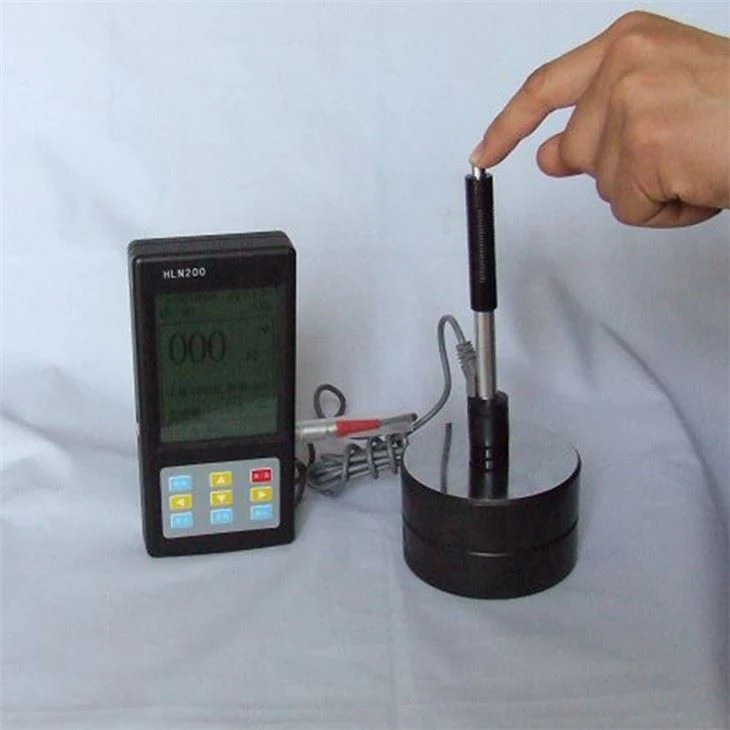
If you are interested in learning more about our rebound hardness testers or if you have any questions about using a rebound hardness tester for nickel alloy hardness testing, please do not hesitate to contact us. Our team of experts is always available to provide you with technical support and advice, and we would be happy to discuss your specific testing requirements with you.
In conclusion, a rebound hardness tester can be used for hardness testing of nickel alloys, but it is important to carefully consider the material properties, test specimen size and shape, test environment, and calibration requirements. By following these guidelines and using a high-quality rebound hardness tester, you can obtain accurate and reliable hardness measurements for your nickel alloy applications.
If you are in need of a reliable and accurate Digital Rebound Hardness Tester or Portable Hardness Tester for your nickel alloy hardness testing needs, we encourage you to contact us to discuss your requirements. Our team of experts will be happy to assist you in selecting the right tester for your application and to provide you with the support and service you need to ensure successful testing.
References
- ASM Handbook, Volume 3: Alloy Phase Diagrams
- ASTM E140 - 12 Standard Hardness Conversion Tables for Metals
- ISO 16859 - 1:2015 Metallic materials - Hardness test - Part 1: Test method for dynamic and static indentation hardness and modulus of elasticity