

Hey there! As a supplier of Vickers Hardness Testers, I often get asked about how to select the appropriate load for a Vickers hardness test. It's a crucial question because choosing the right load can significantly affect the accuracy and reliability of your test results. In this blog post, I'll share some insights on this topic based on my experience in the industry.
First off, let's understand what the Vickers hardness test is all about. The Vickers hardness test is a widely used method for measuring the hardness of materials. It involves pressing a square-based diamond pyramid indenter into the surface of the material under a specific load. The size of the indentation left by the indenter is then measured, and the Vickers hardness number (HV) is calculated based on the load applied and the surface area of the indentation.
Now, when it comes to selecting the appropriate load for a Vickers hardness test, there are several factors to consider.
Material Type
Different materials have different hardness characteristics, and the load you choose should be appropriate for the material you're testing. For example, if you're testing a soft material like aluminum or copper, a lower load may be sufficient. On the other hand, if you're testing a hard material like steel or carbide, a higher load will be needed to produce a measurable indentation.
Let's say you're using our Vickers Testing Machine. For soft materials, you might start with a load of 1 kgf or 2 kgf. This allows you to get a clear indentation without causing excessive deformation of the material. For harder materials, you could go up to 10 kgf or even higher, depending on the specific properties of the material.
Specimen Size and Thickness
The size and thickness of the specimen also play a role in load selection. If you have a small or thin specimen, using a high load may cause the specimen to deform or even break. In such cases, a lower load is recommended. Conversely, if you have a large and thick specimen, you can typically use a higher load without any issues.
For instance, if you're testing a thin sheet of metal, a load of 0.2 kgf or 0.5 kgf might be more appropriate. This ensures that the indentation is made without causing the sheet to bend or buckle. If you're testing a thick block of material, you can use a load of 5 kgf or more.
Test Purpose
The purpose of your test can also influence the load selection. If you're conducting a general hardness assessment of a material, you can choose a standard load based on the material type and specimen size. However, if you're testing for a specific application, such as determining the hardness of a surface layer or evaluating the effect of heat treatment, you may need to select a different load.

For example, if you're interested in the hardness of a surface layer, a lower load can be used to focus on the top layer of the material. This is because a lower load will produce a shallower indentation, which is more likely to be within the surface layer. If you're testing the overall hardness of a heat-treated material, you may need to use a higher load to ensure that the indentation penetrates through the affected layers.
Indentation Size Requirements
The size of the indentation is another important consideration. The indentation should be large enough to be measured accurately, but not so large that it causes excessive damage to the specimen. In general, the diagonal of the indentation should be at least 0.1 mm for accurate measurement.
Our Vickers Hardness Testing Machine is equipped with advanced measurement systems that can accurately measure indentations of different sizes. However, to ensure the best results, you need to choose a load that will produce an indentation within the optimal size range.
Load Selection Guidelines
Here are some general guidelines to help you select the appropriate load for a Vickers hardness test:
- Soft Materials (HV < 100): Start with a load of 1 kgf or 2 kgf. If the indentation is too small to measure accurately, you can try a slightly higher load.
- Medium-Hard Materials (HV 100 - 500): A load of 2 kgf to 5 kgf is usually suitable. Adjust the load based on the specimen size and the desired indentation size.
- Hard Materials (HV > 500): Use a load of 5 kgf or higher. For very hard materials like carbide, you may need to use a load of 30 kgf or more.
It's important to note that these are just general guidelines, and you may need to adjust the load based on your specific testing requirements.
Using Our Digital Display Low Load Vickers Hardness Testing Machine
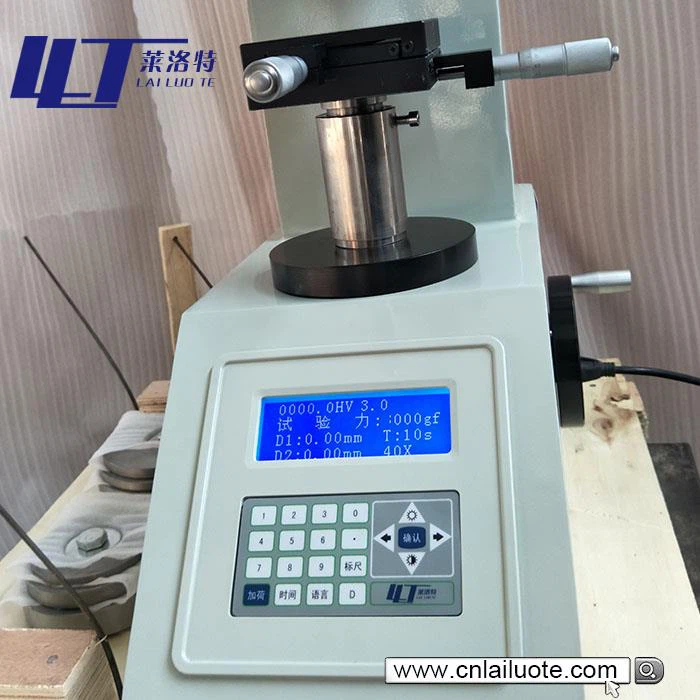
Our Digital Display Low Load Vickers Hardness Testing Machine is a great option for testing a wide range of materials with different loads. It features a digital display that shows the load, indentation size, and Vickers hardness number, making it easy to operate and obtain accurate results.
The machine allows you to select different loads from 0.2 kgf to 5 kgf, which is suitable for testing soft to medium-hard materials. It also has a high-precision indenter and measurement system, ensuring that you get reliable and consistent results.
In conclusion, selecting the appropriate load for a Vickers hardness test is a critical step in obtaining accurate and meaningful results. By considering factors such as material type, specimen size and thickness, test purpose, and indentation size requirements, you can choose the right load for your specific testing needs.
If you're in the market for a Vickers hardness tester or have any questions about load selection, don't hesitate to contact us. We're here to help you make the best choice for your testing requirements and provide you with top-quality products and services. Let's start a conversation and see how we can work together to meet your needs!
References
- ASTM E92 - Standard Test Method for Vickers Hardness and Knoop Hardness of Metallic Materials
- ISO 6507 - Metallic materials -- Vickers hardness test